Wells
England's smallest city, built around a cathedral
Photo © Steven Eastham, Google Maps
Wells sits in a gentle gap between the Mendip Hills and the Somerset Levels, and for a place that has held city status since medieval times it feels remarkably like a market town — a cluster of honey-coloured stone around a cathedral green, with sheep-cropped fields visible at the end of almost every side street. The city takes its name from the natural springs that still rise in the Bishop's Palace gardens, and it is that combination of water, stone and unhurried scale that gives Wells its particular charm: nowhere is more than a few minutes' walk from open country, yet the centre holds one of the great medieval set-pieces of England.
What makes Wells worth the detour is how much of its medieval fabric has survived intact. The cathedral, the fortified Bishop's Palace and the cobbled terrace of Vicars' Close form a single continuous scene that has barely changed in six hundred years, and the city has grown up around them rather than over them. Add a lively Saturday market on the Market Place, a clutch of independent shops and pubs, and easy access to Cheddar Gorge, Glastonbury and the Somerset Levels, and Wells makes a compact but rewarding base for exploring this corner of the West Country.
Top things to do in Wells
Wells rewards slow exploration on foot — most of its sights sit within a few hundred metres of each other in the cathedral quarter.
- Wells Cathedral — The scissor arches supporting the crossing tower are one of English Gothic's great engineering solutions, added in the 14th century when the original tower began to subside; the west front carries one of the largest collections of medieval statuary in Europe, and the 14th-century astronomical clock is still one of the oldest working clocks in the world.
- Bishop's Palace and moat swans — A genuinely fortified bishop's residence, complete with drawbridge, portcullis and a spring-fed moat, set in 14 acres of gardens where the springs that give Wells its name rise into ornamental pools. The resident mute swans have long been known for tugging a bell-pull by the gatehouse to beg for food, a trick first taught to the birds in Victorian times.
- Vicars' Close — Built in the 1300s to house the cathedral's choir of vicars choral, this is widely held to be the oldest purely residential street in Europe with its original buildings still substantially intact; the slightly tapering width of the close is a deliberate trick of perspective, making the chapel at the far end look further away than it is.
- England's smallest city — Wells has held city status since at least the Middle Ages by virtue of its cathedral, despite a population of only around 12,000, and its compact centre can be comfortably explored in half a day.
- Wells Market Place and the Bishop's Eye — The medieval market square still hosts a Wednesday and Saturday market, framed by the 15th-century Penniless Porch and the moated gatehouse into the Bishop's Palace grounds.
- Wells & Mendip Museum — A small independent museum on Cathedral Green covering local geology, archaeology and the Mendip caving history that connects Wells to nearby Wookey Hole.
- Mendip Hills — This Area of Outstanding Natural Beauty rises immediately north of the city, offering limestone gorges, cave systems and walking routes including the popular ascent to the trig point above Priddy.
Getting to Wells
Wells has no railway station — the line closed in the 1960s — so the practical options are road or bus. By car, the city sits just off the A39 and A371, roughly 20 minutes from Bristol via the A37, and about 35 minutes from the M5 at Bridgwater or Weston-super-Mare. The nearest mainline stations are Castle Cary, Bath Spa and Bristol Temple Meads, all around 45 minutes away by connecting bus or taxi. Regular bus services link Wells to Bristol, Bath, Glastonbury, Street and Shepton Mallet, and the city centre itself is compact enough to explore entirely on foot once you arrive, with several car parks a short walk from the Market Place.
Best time to visit Wells
Late spring through early autumn (May to September) gives the longest days for exploring the cathedral grounds, Bishop's Palace gardens and the Mendip Hills beyond, with the palace gardens at their best when the wisteria and roses are out in May and June. Summer weekends bring more visitors and busier market days, so early mornings are quieter for photographing the west front or Vicars' Close. Autumn brings mellow colour to the Palace grounds and moat, while December sees the cathedral host its popular carol services and a Christmas market on the green. Winter is markedly quieter and can be atmospheric, though some attractions run reduced hours out of season.
Where to stay in Wells
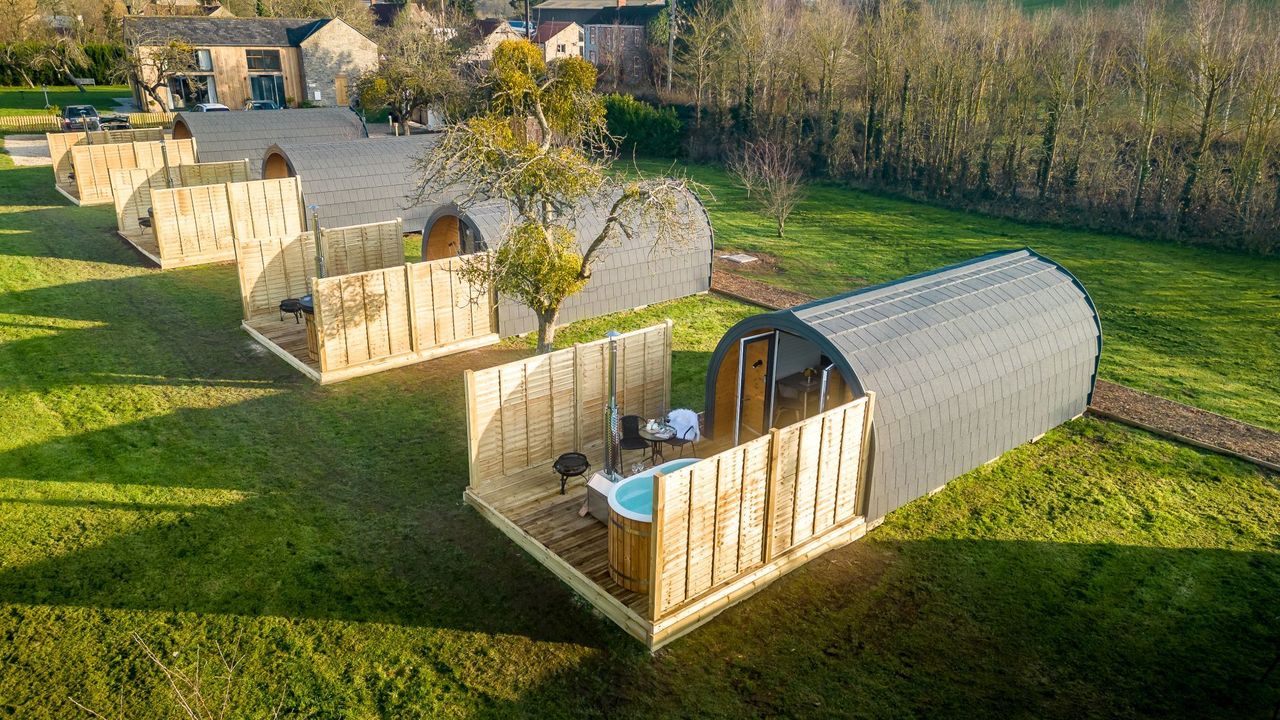
The city centre has a handful of historic coaching inns with rooms, including The Crown on the Market Place and The Swan opposite the cathedral's west front, both offering the convenience of stepping straight out into the cathedral quarter. Beyond the centre, Wells and the surrounding villages have a good spread of B&Bs and guesthouses in Georgian and Victorian townhouses, many within walking distance of the cathedral. For a rural base, the countryside towards the Mendip Hills and out towards Wookey Hole and Cheddar has farmhouse B&Bs and small country hotels, useful if you plan to combine a Wells visit with walking or caving nearby.
Food and drink in Wells
The Swan's restaurant, opposite the cathedral, has held a place in the Michelin Guide on and off since the very first edition in 1911. Goodfellows @7B on Sadler Street has been a fixture of the local dining scene for over 15 years, pairing Mediterranean-leaning menus with British ingredients. For classic pub food, The Fountain Inn near the cathedral and The Swan Inn both serve locally sourced dishes alongside Butcombe ales brewed just down the road in North Somerset. Bishops Eye, set in the Grade II-listed gatehouse of the Bishop's Palace, makes an atmospheric spot for a coffee or light lunch, while The Good Earth on the high street has served homemade vegetarian food for over 40 years. The Wednesday and Saturday market on the Market Place is a good source of local produce, and the surrounding Somerset countryside supplies much of what appears on menus across the city.