Skegness
Big skies, golden sands and Britain's original holiday-camp seaside
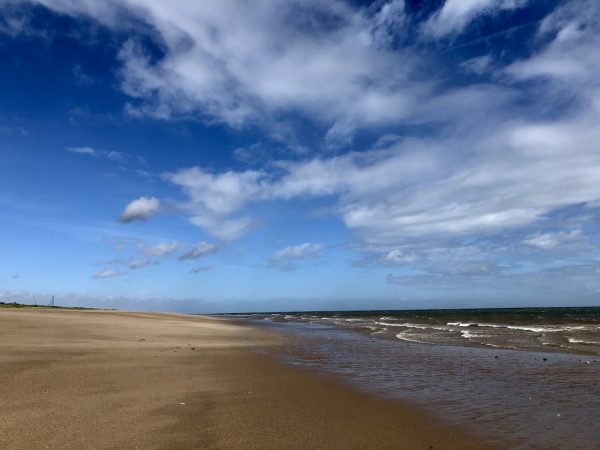
Skegness sits on the Lincolnshire coast where the land runs flat and low into the North Sea, giving it something few English resorts can match: a genuinely vast beach, backed by dunes and marram grass, that stretches for miles either side of the town centre. This is old-school English seaside at full volume — a working pier, a mile of amusement arcades along the front, and a resident population that swells many times over each summer as families arrive from Nottingham, Sheffield, Leicester and beyond for a week of fish and chips, donkey rides and candy floss.
It earned its reputation the hard way. In 1908 the Great Northern Railway commissioned illustrator John Hassall to paint a chubby fisherman skipping along the sand under the slogan "Skegness is SO Bracing" — the poster made the town's name nationally, and the Jolly Fisherman still appears on road signs and branding around town today. Then in 1936 Billy Butlin chose Ingoldmells, just north of Skegness, to open the very first Butlin's holiday camp in Britain, cementing the area as the spiritual home of the traditional British seaside holiday. That legacy is still visible everywhere: this stretch of coast, running from Skegness through Ingoldmells to Chapel St Leonards, has one of the densest concentrations of caravan and holiday parks in the country.
But Skegness isn't just candy-floss nostalgia. South of the pier, the coastline turns wilder at Gibraltar Point, a National Nature Reserve of saltmarsh, dunes and mudflats where nearly 340 bird species have been recorded since one of England's earliest bird observatories was set up here in 1949. Inland, the ground rises gently into the Lincolnshire Wolds, a designated National Landscape of quiet villages and chalk hills that most visitors to the coast never think to explore — giving Skegness an odd, appealing split personality: brash seafront on one side, genuine rural England twenty minutes inland.
Getting to Skegness
There's no direct rail line from London — the standard route is LNER from King's Cross to Grantham (around an hour), then an East Midlands Railway connection on to Skegness, which takes a further hour and a half or so; allow around three to three and a half hours door to door with a good connection, longer if you miss one, since the branch line service isn't frequent. From Nottingham, East Midlands Railway runs a direct service to Skegness taking just under two hours, and there are connections from Sheffield and Leicester too, mostly changing at Grantham or Nottingham.
By road, Skegness sits at the end of the A158 from Lincoln (about 42 miles, roughly an hour's drive) and the A52, which threads down from Grantham and Boston. From the East Midlands (Nottingham, Leicester, Derby) it's around two hours via the A52; from Sheffield or South Yorkshire, expect closer to two and a half hours cutting across Lincolnshire on the A17 or A16. The nearest airports are Humberside, about 45 minutes north, and East Midlands, around two hours southwest — neither has significant scheduled links to major hubs, so most visitors fly into East Midlands or Manchester and drive.
Parking in the town centre fills up fast on sunny summer weekends; the seafront car parks (Grand Parade, Tower Gardens) get busy from mid-morning, and most caravan parks in Ingoldmells and Chapel St Leonards have their own on-site parking included.
Best time to visit Skegness
July and August are peak season by a wide margin — school holidays fill Butlin's, Fantasy Island and the caravan parks along the coast, and the beach and seafront arcades are at their liveliest, if also their most crowded and priced-up. June and early September offer a good middle ground: warm enough for the beach, noticeably quieter, and still with most attractions and the pier fully open.
Spring (April–May) suits walkers and birdwatchers heading for Gibraltar Point, when migrating waders and terns pass through, and the Wolds inland are at their greenest. Winter is genuinely quiet — many seafront attractions close or reduce hours between November and March, and the "bracing" in the old slogan is not an exaggeration when the wind comes straight off the North Sea — but it's also when accommodation is cheapest and the beach is at its most dramatic and empty.
Where to stay in Skegness(57)
All hotels in Skegness →About staying in Skegness
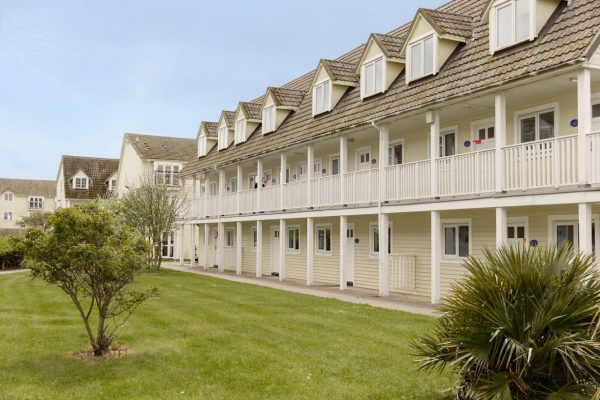
Skegness's hotel stock is built around its identity as a traditional family resort, so most options cluster along the seafront — South Parade, Grand Parade and the streets just back from the promenade — within easy walking distance of the beach, pier and arcades. These range from long-established seaside hotels with sea views and en-suite doubles to smaller guesthouses and B&Bs, generally in the £70–£120 a night range in peak season and noticeably cheaper outside July and August. Many are geared toward returning families and coach parties, with straightforward, unfussy rooms rather than boutique styling — this is a resort that prioritises value and location over design.
For something closer to a full holiday-camp experience, Butlin's Skegness itself offers hotel-style accommodation alongside its caravans and apartments, bundling entertainment, pools and activities into the stay — a strong option for families wanting everything on one site rather than venturing into town each day.
Just north of town, Ingoldmells and Chapel St Leonards are dominated by holiday parks rather than conventional hotels, but many now include static lodges and higher-spec accommodation with hot tubs or sea glimpses, aimed at couples and small groups as well as families; these need booking well ahead for peak weeks, sometimes as much as six months to a year in advance for the busiest fortnight of the summer.
Travellers wanting a quieter base with easier access to the Lincolnshire Wolds should look inland toward Burgh le Marsh, Alford or Spilsby, where village inns and rural B&Bs offer a calmer alternative a short drive from the coast — useful if the seafront's arcade-and-funfair atmosphere isn't the priority, and a good base for splitting a stay between beach days and walking in the Wolds. Across all options, book early for school holiday weeks; this coast is one of the most heavily reserved family-holiday destinations in England each summer, and last-minute availability in August is scarce.
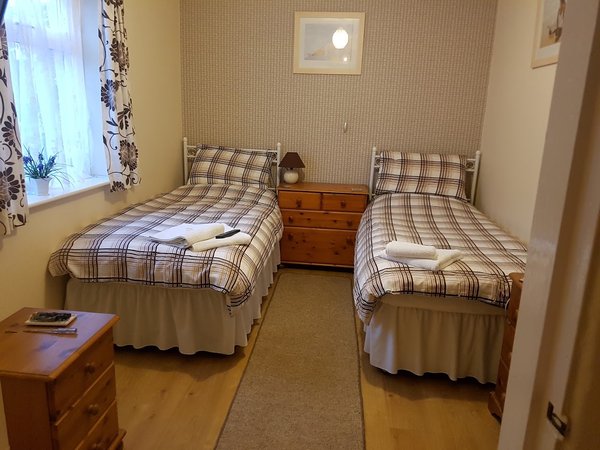
Beachdene Guest House
Beachdene Guest House, Skegness
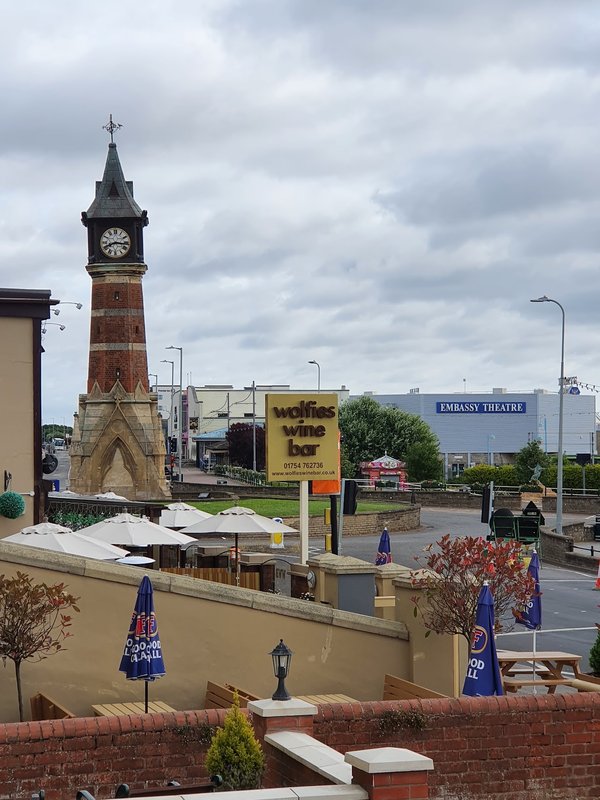
Belle View Hotel
12 South Parade, Skegness
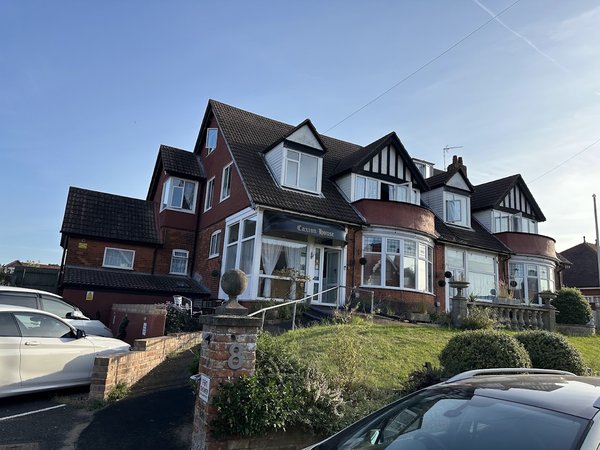
Caxton House
6-8 Trafalgar Avenue, Skegness
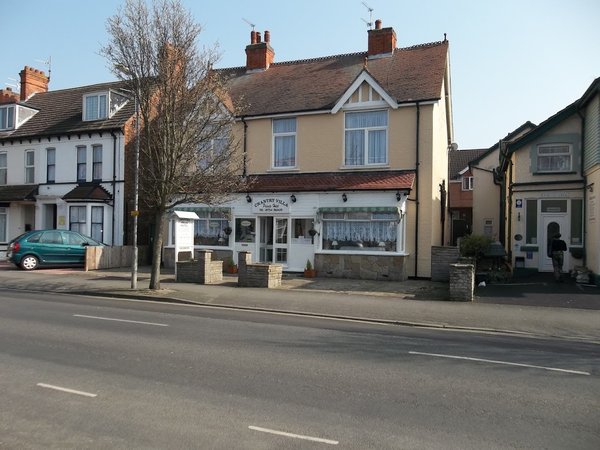
Chantry Villa Hotel
57 Drummond Road, Skegness
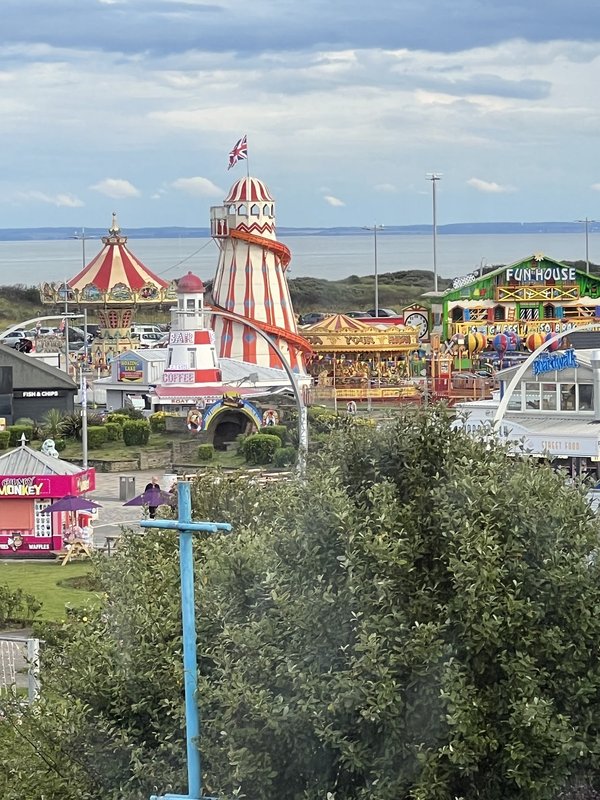
Clarence House
32 South Parade, Skegness
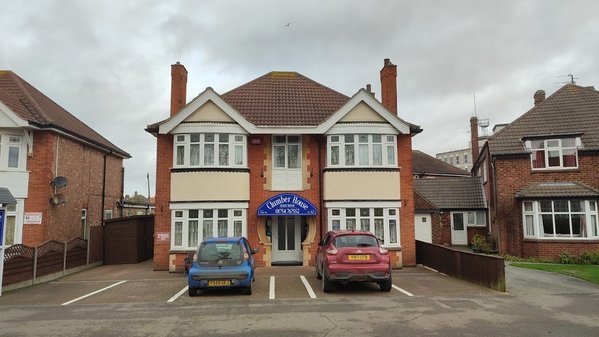
Clumber House Hotel
17 Castleton Boulevard, Skegness
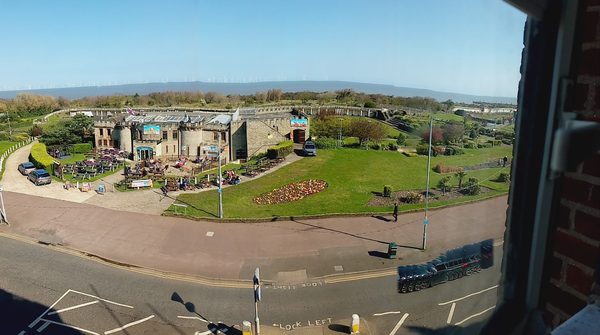
County Hotel
North Parade, Skegness
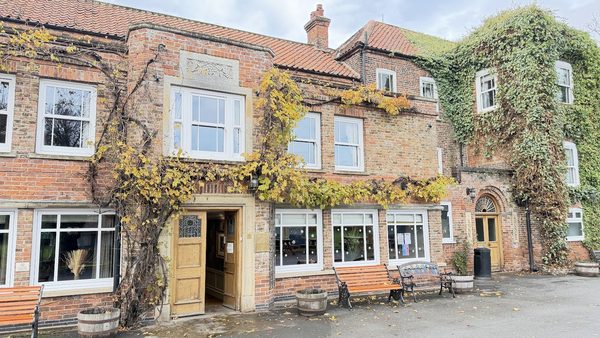
Crown Hotel
Drummond Road, Skegness
Things to Do in Skegness(22)
All attractions in Skegness →Top things to do in Skegness
Skegness packs a lot into a small area, and most of its best-known attractions are within walking distance of the seafront or a short drive north towards Ingoldmells.
- Skegness Beach — the reason the town exists: several miles of clean, gently shelving sand, wide enough at low tide to lose the crowds even in August, with a Blue Flag stretch near the pier.
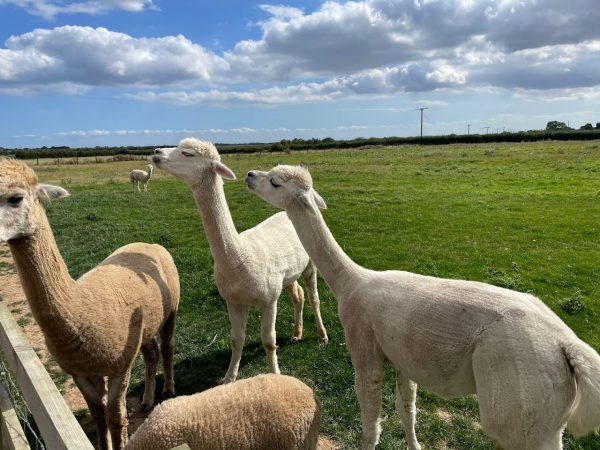
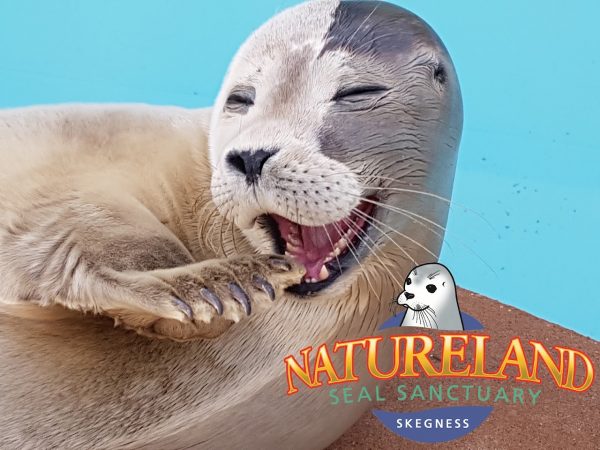
- Natureland Seal Sanctuary — on North Parade since 1965, this rescue centre for injured harbour and grey seal pups found on the Lincolnshire coast also keeps penguins, meerkats, alpacas and a tropical Floral Palace of free-flying butterflies.
- Skegness Pier — built in 1881 and reduced from its original length by storm damage over the decades, the pier still hosts bowling, an amusement arcade and escape rooms, with redevelopment plans since new ownership took over in 2021.
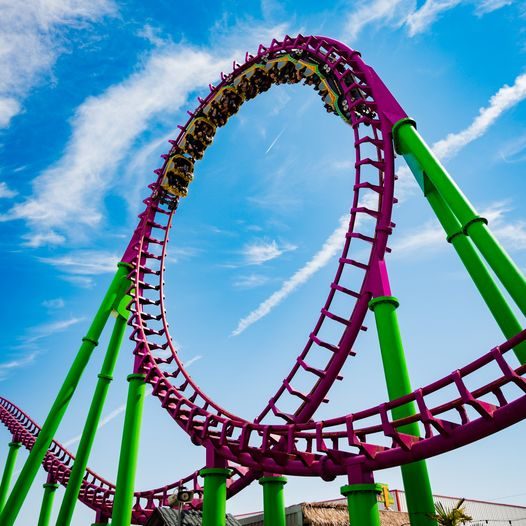
- Fantasy Island — a theme park at nearby Ingoldmells built around the Millennium indoor market and a clutch of proper thrill rides, including one of the region's better roller coasters.
- Butlin's Skegness — the original 1936 holiday camp, still operating and now geared toward day visits as well as full stays, with waterparks, funfairs and live entertainment.
- Gibraltar Point National Nature Reserve — three miles of dunes, saltmarsh and mudflat south of the town, laced with footpaths and a visitor centre, and one of the best birdwatching sites on the east coast.
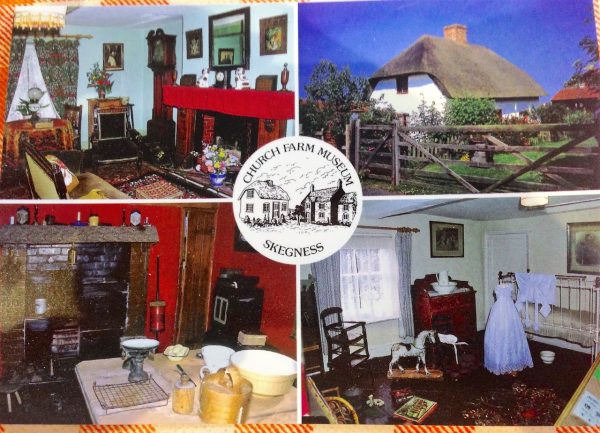
- Church Farm Museum — a preserved Victorian Lincolnshire farmstead on the edge of town with farmhouse, outbuildings and rare-breed animals, giving a sense of what this coast looked like before the resorts arrived.
- Embassy Theatre — the town's main entertainment venue on the seafront, staging touring musicals, comedy and tribute shows through the season.
- Skegness Water Leisure Park — a family-run fishing and leisure lake just outside town, popular with anglers and caravanners staying nearby.

Where to Eat in Skegness(90)
All restaurants in Skegness →Food and drink in Skegness
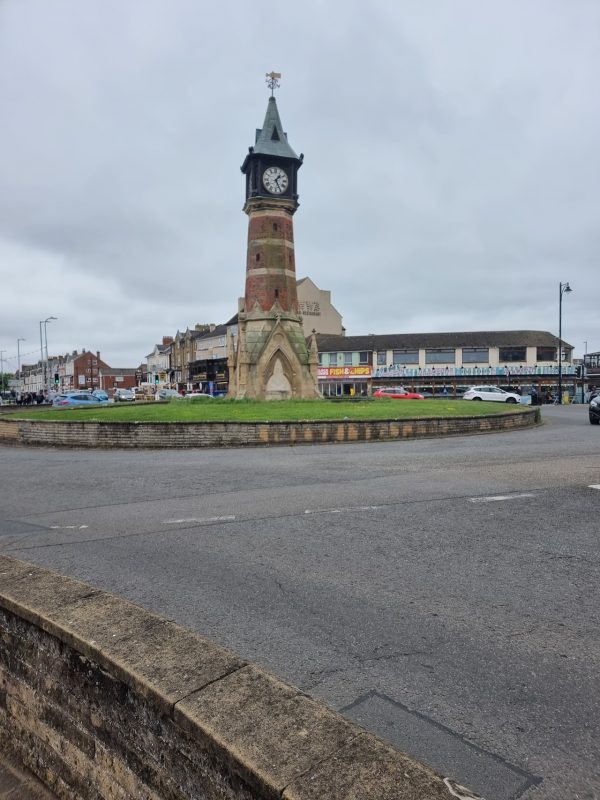
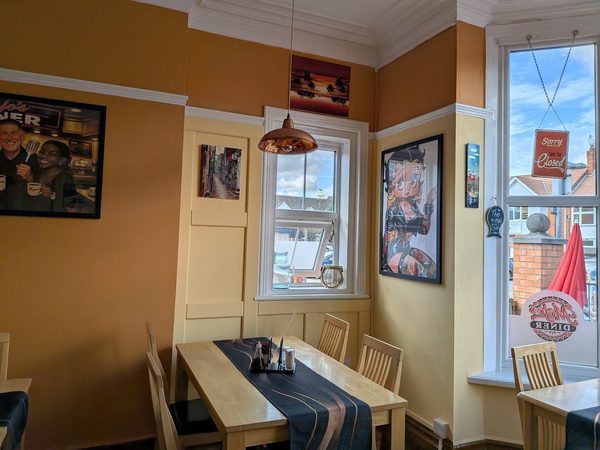
Fish and chips is close to a civic duty here, helped by the proximity of Grimsby's fishing fleet. Trawler's Catch, by the clock tower, and Eptons, a family-run chippy trading since 1894, are long-standing local favourites, while Seaview Fisheries down the coast in Chapel Point draws queues for fish straight off the boats. The Blue Fin offers a quieter sit-down alternative for the same catch.
Beyond chips, the seafront has the usual run of cafés, ice cream parlours and carveries aimed at holidaymakers, plus a scattering of independents doing more — Tarantino's, an Italian near the beach, is a regular local recommendation. For a proper pub meal, head slightly inland: the Fleece Inn at Burgh le Marsh does hearty classics like rib-eye and stilton chicken in a traditional setting with a garden, and villages around the Wolds have decent country pubs serving Lincolnshire produce, including the county's well-regarded sausages and Lincolnshire Poacher cheese, both worth seeking out at farm shops on the way in or out of town.

Attractions Near Skegness
All attractions in Skegness →Worth the trip — within 50 miles of Skegness.
 3 mi
3 mi
Butlin's Skegness
Ingoldmells · ⭐ 4.4
Big Kid Circus
Heckmondwike · ⭐ 5.0
 9 mi
9 mi
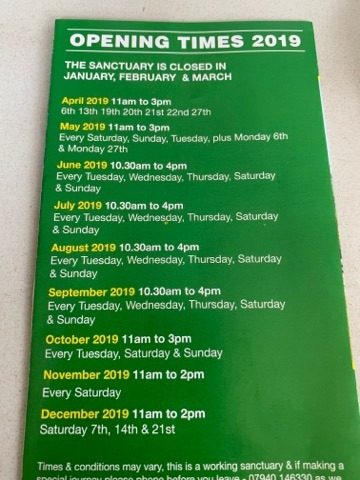
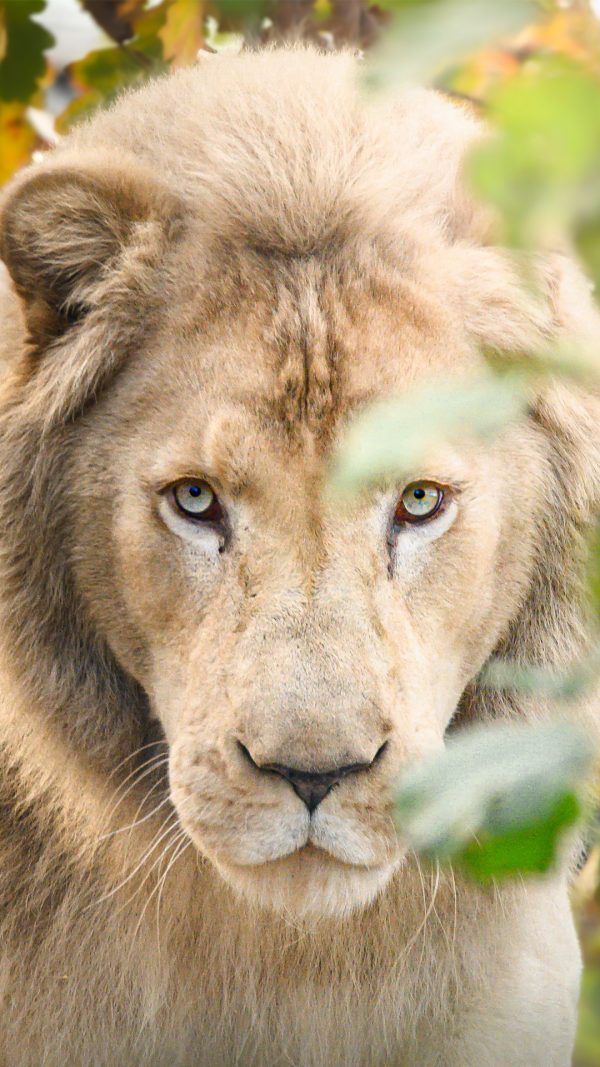
Radcliffe Donkey Sanctuary
Huttoft · ⭐ 4.8
 9 mi
9 mi
Lincolnshire Wildlife Park
Boston · ⭐ 4.6
 11 mi
11 mi
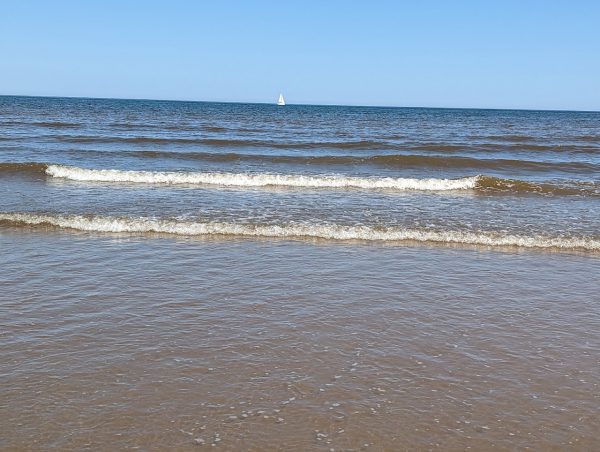
Sutton On Sea Beach
Sutton-on-Sea · ⭐ 4.6
 13 mi
13 mi
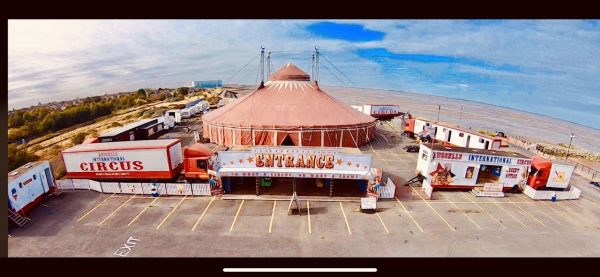
Russell's International Circus
Nottingham · ⭐ 4.7
 14 mi
14 mi
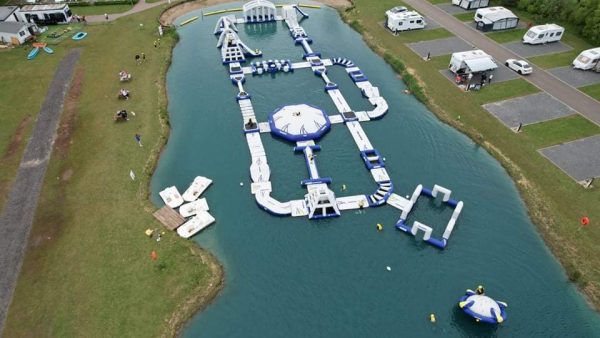
Lincolnshire Aquapark
Mablethorpe · ⭐ 4.7
Mablethorpe Beach
Mablethorpe · ⭐ 4.7
Camping in Skegness(21)
All campsites in Skegness →About camping in Skegness
Camping around Skegness means one thing above almost anywhere else in England: caravans. This stretch of Lincolnshire coast, running from Skegness through Ingoldmells to Chapel St Leonards, has one of the densest concentrations of caravan and holiday parks in the country, a legacy of Butlin's opening the UK's first holiday camp here in 1936. Static caravans, touring pitches and increasingly glamping pods and lodges sit side by side across dozens of parks, many with direct or near-direct access to the beach and their own pools, clubhouses and entertainment programmes — this is family holiday camping in its most traditional English form, not wild solitude.
The terrain itself is flat and low-lying, sand and dune giving way to reclaimed marshland further inland, which makes for easy, gentle walking but also means the coast is fully exposed to whatever the North Sea sends in. Wind off the water is a near-constant feature — it's no accident the old tourist slogan called the resort "bracing" rather than balmy — so a decent windbreak and a caravan or well-pegged tent matter more here than at more sheltered inland sites. Touring and tent pitches are widely available at parks like Riverside Holiday Park and Country Meadows in Ingoldmells, both a short walk from the sand, alongside quieter, more rural options around Burgh le Marsh such as Sycamore Farm Park, which mixes glamping units and cottages with a calmer, less resort-driven atmosphere.
As everywhere in England, wild camping without the landowner's permission is illegal, and that applies fully along this coast — the dunes and nature reserves, including Gibraltar Point, are protected habitat, not informal camping ground, and rangers do enforce it. Anyone wanting a freer, off-grid feel is better served by the small farm-based campsites inland toward the Wolds, several of which allow fires and have genuinely dark, quiet pitches away from the seafront.
May to September is the realistic camping season; peak school-holiday weeks in late July and August get booked out on the bigger parks many months in advance, so touring pitches for August are worth securing by spring. June and early September offer warmer, calmer weather with far fewer people, and are generally the better months for anyone touring by tent rather than settling into a static caravan for the week. Glamping options — pods, safari tents and shepherd's huts — have grown steadily on parks around Ingoldmells and the Wolds villages, giving a lower-effort alternative to traditional tent camping without losing the outdoor feel, and a useful option in a region where a stiff onshore breeze is part of the deal.
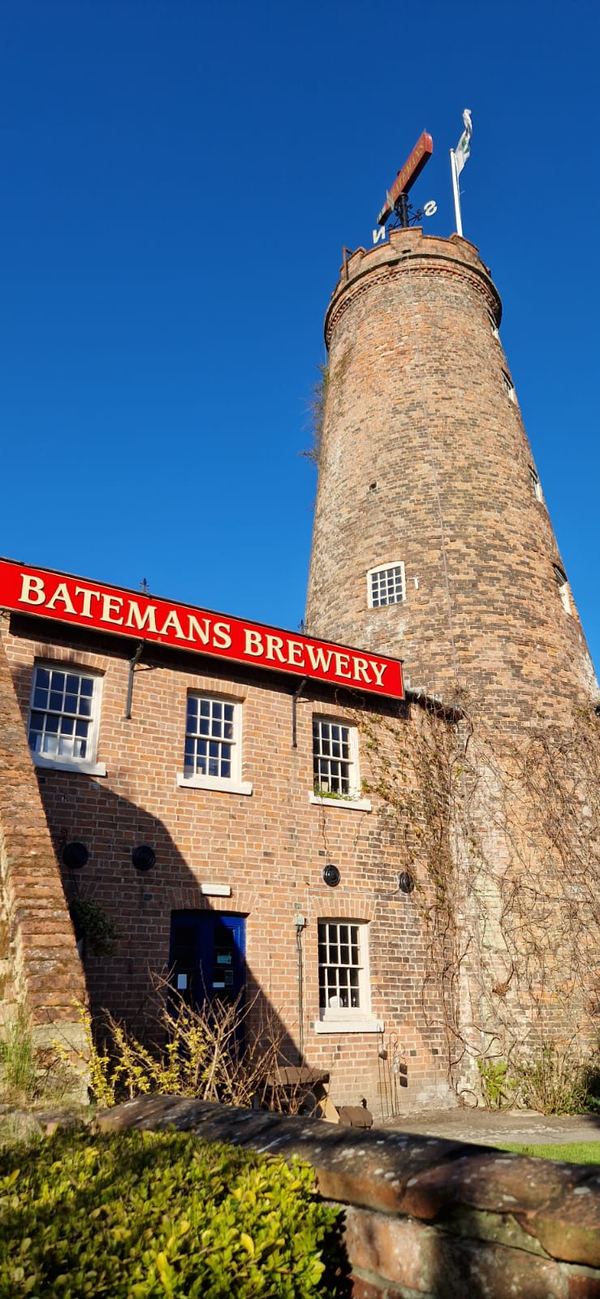
Batemans Brewery Caravan Site
⭐ 4.6 · from £20/night
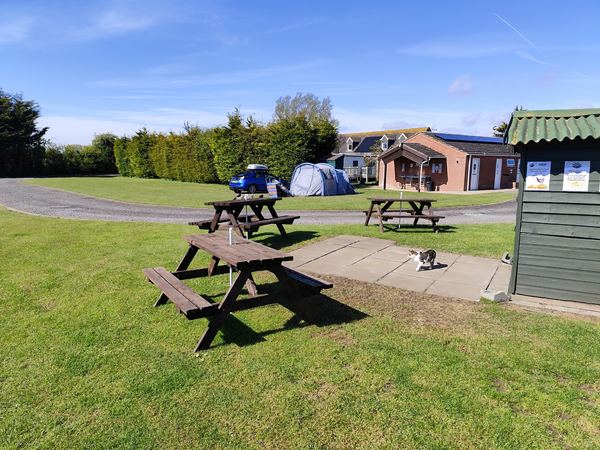
Birchwood Fishing and Camping
⭐ 4.6 · from £10/night
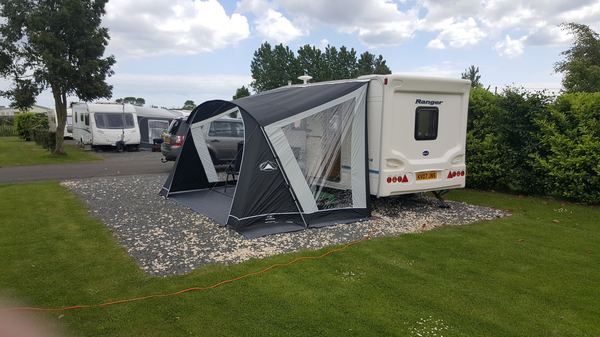
Eastview Caravan Park
⭐ 4.4 · from £28/night
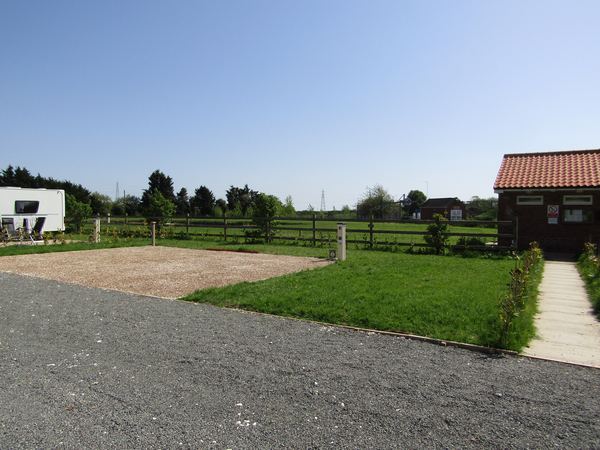
Grooby's Pit
⭐ 4.8
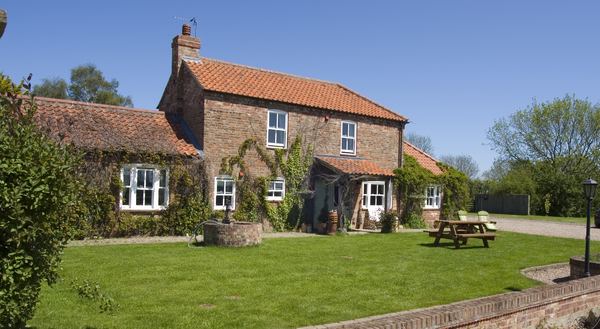
Jockhedge Touring Site
⭐ 4.0 · from £50/night
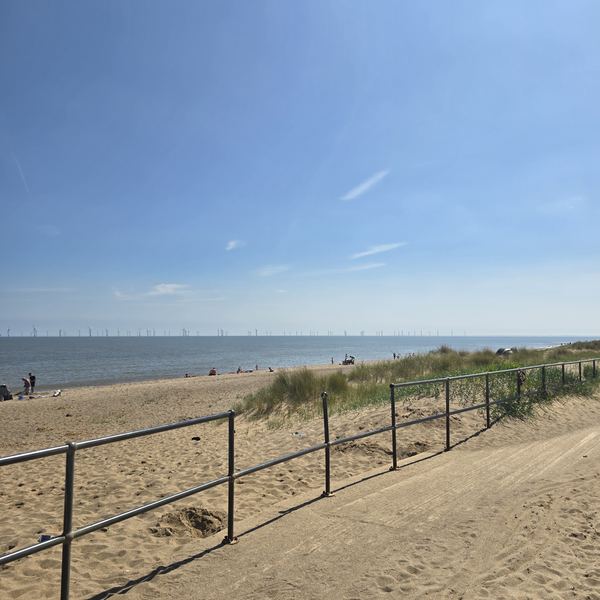
Lakeland Caravan Park
⭐ 3.6 · from £27/night
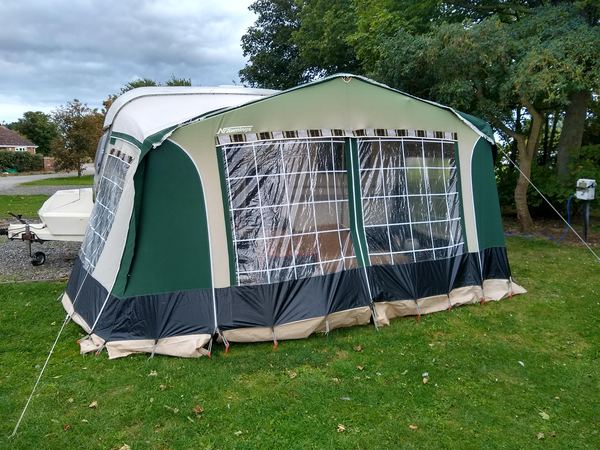
Manor Farm Caravan Park
⭐ 4.7 · from £26/night
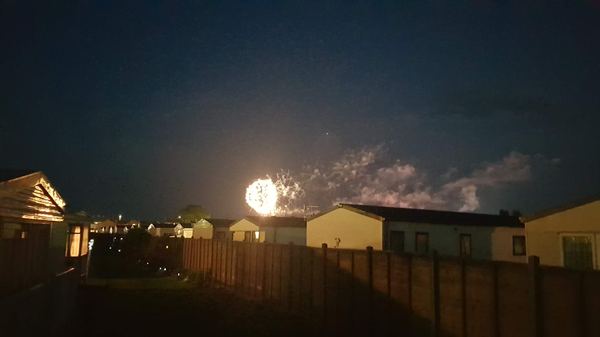
North Shore Holiday Centre
⭐ 4.3 · from £18/night
Self-Catering Cottages in Skegness
All cottages in Skegness →
Golden Palm Resort
3 cottages · from £468
Chapel Fields Pods
2 cottages
Cherry Blossom
3 bed · sleeps 6 · from £537
Ella’s Apartment
2 bed · sleeps 4 · from £303
Pier View
3 cottages · from £227
Lilac Villa
5 bed · sleeps 10 · from £857
Détendez A La Côte
2 bed · sleeps 4 · from £617
Pool House - Acorn Holiday Cottages
1 bed · sleeps 2 · from £747
Common questions about Skegness
How many campsites are there in Skegness?
We list 21 campsites in and around Skegness, of which 21 take tents and 3 offer glamping.
Are there dog-friendly campsites in Skegness?
Yes — 9 of the 21 campsites we list in Skegness accept dogs, including Grooby's Pit and Manor Farm Caravan Park.
Which campsites in Skegness have electric hook-up?
19 of the 21 campsites we list in Skegness offer an electric hook-up.
Where can I stay in Skegness?
We list 57 hotels, B&Bs and guest houses in and around Skegness.
What is there to do in Skegness?
We list 22 attractions and things to do in and around Skegness.
Where can I eat in Skegness?
We list 90 restaurants, pubs and cafes in and around Skegness.