Brighton
Regency palaces, pebble beach and salt-air swagger
Photo © peter musinsky, Google Maps
Brighton sits on the Sussex coast about fifty miles due south of London, at the point where the chalk ridge of the South Downs runs out at the sea and breaks off into cliffs and a long grey shingle beach. It began as Brighthelmstone, a fishing town that had lost most of its boats and half its lower streets to storms by the early eighteenth century, and it was rescued by fashion rather than industry. A Lewes physician began prescribing sea bathing as a cure for almost everything, the Prince of Wales came down to try it in 1783, and within forty years he had built himself a domed and minaretted palace a few hundred yards from the water. The railway arrived in 1841 and turned a resort for the wealthy into a resort for everyone, and Brighton has been arguing about which of those it wants to be ever since.
The result is a city with an unusually distinct character for somewhere this close to London. Regency terraces in cream stucco run east and west along the front, some restored to the last railing and some pleasantly worn by salt air. Behind them the twisting alleys of The Lanes and the wider grid of North Laine hold several hundred independent shops - records, vintage clothing, secondhand books, tattooists, jewellers - and very few chains. Two universities, a large creative and digital sector and one of the oldest and most visible LGBTQ+ communities in Britain give the place a young, opinionated, faintly bohemian temperament that is obvious within about ten minutes of arriving.
Brighton and Hove has been a single city since 2000, and the two halves still feel different. Brighton is dense, steep and noisy; Hove, immediately to the west, has broader streets, mown lawns, a run of painted beach huts and a calmer pace. The beach itself is shingle rather than sand, which keeps it clean and makes swimming easy but rules out sandcastles. The South Downs National Park comes right up to the northern edge of the built-up area, so it is possible to be walking on open chalk grassland twenty minutes after leaving the seafront. Almost nothing a visitor wants is more than a half-hour walk from anything else, and a car is more nuisance than help.
Getting to Brighton
Brighton is one of the easiest coastal cities in Britain to reach without a car. Fast Southern services from London Victoria take about an hour, trains from London Bridge take roughly the same, and Thameslink runs through St Pancras, Farringdon and London Blackfriars in around an hour and a quarter, which is useful if you are coming from the north on a through ticket. Gatwick Airport is only about half an hour up the line, so Brighton works well as a first or last night before a flight. Coastway services connect east to Lewes, Eastbourne and Hastings and west to Worthing, Chichester and Portsmouth. The station sits at the top of a hill and it is a downhill walk of ten to fifteen minutes to the seafront.
By road it is the A23 and M23 from junction 7 of the M25, about fifty-five miles and usually an hour and a half, though summer Fridays and bank holiday weekends can double that on the final stretch. The A27 runs along the back of the city and links to Lewes and Eastbourne one way and Worthing and Chichester the other.
Parking is the one genuine difficulty. Almost the whole of central Brighton and Kemptown is under resident permit control, on-street charges are high and hotel parking is rare and often off-site. The practical options are the multi-storey car parks at Regency Square, Church Street and The Lanes, or the car park at Brighton station, and a park-and-ride operates at Withdean for major events. If you are only visiting the city, leaving the car at home is almost always the better decision. For the airports, Gatwick is thirty minutes by train, Heathrow about two hours by coach, and the Newhaven to Dieppe ferry leaves from twenty minutes along the coast.
Best time to visit Brighton
Spring is arguably the best-value season. April and May bring the Brighton Marathon, the month-long Brighton Festival and its enormous Fringe, and The Great Escape, which fills small venues across the city with new bands over a single weekend. The Downs are at their best in May, before the grass dries out, and hotel rates have not yet reached their summer level.
Summer is when the city is at full volume. June to August is warm, busy and long-lit, with the sea reaching around seventeen or eighteen degrees by late August, which is as good as the Channel gets. Brighton Pride takes over the first weekend of August and is the single busiest period of the year - rooms are booked out months ahead and prices rise sharply, so either plan for it deliberately or avoid it deliberately.
Autumn suits people who want the seaside without the crush. September often holds the warmth, the water is at its warmest of the year, the beach empties after the schools go back and rates fall noticeably. The London to Brighton Veteran Car Run finishes on Madeira Drive on the first Sunday of November and is worth timing a visit around.
Winter is cheap, blustery and rather good. Storms drive spectacular surf against the shingle, the Pavilion grounds take an ice rink over Christmas, and the restaurants and spas are easy to get into. Some seafront kiosks and rides close or run reduced hours between November and March, and the wind coming off the Channel is genuinely cold, so this is a season for eating, drinking and gallery-going rather than sunbathing.
Where to stay in Brighton(105)
All hotels in Brighton →About staying in Brighton
Brighton has more beds per head than almost any English city outside London, which is good news for choice and unhelpful for narrowing things down. The first decision is not really price but position, because the city is small enough that everywhere central is walkable and different enough between districts that the wrong choice can colour a whole weekend.
The seafront along Kings Road is the classic option. Big Victorian and Regency hotels face the water, sea-view rooms cost noticeably more than those at the back, and everything a first-time visitor wants is within ten minutes on foot. The trade-off is noise: the stretch closest to the Palace Pier is busy until the early hours at weekends, and rooms at the front catch traffic as well as gulls. Ask for a higher floor.
Just behind the front, The Lanes and North Laine put the restaurants, bars and independent shops on your doorstep. Hotels here tend to be small, converted and full of character, with narrow staircases and no parking whatsoever. They suit short city breaks where you intend to walk everywhere and eat late.
Kemptown, east of the pier, is where Brighton's guest houses and B&Bs cluster, in the grand Regency crescents around Sussex Square and Lewes Crescent. Prices are lower than on the seafront proper, breakfasts are usually better, and the walk into the centre is a pleasant fifteen minutes along Marine Parade. Regency Square and the western seafront offer a similar mix of converted townhouses with the considerable advantage of a large car park underneath the square.
Hove is the answer for families and anyone staying more than two or three nights, with quieter streets, the lawns and the beach huts, and easier parking. Brighton Marina and the residential streets around Preston Park are cheaper again but need a bus or a longer walk. Whatever you choose, book well ahead for May, for August, and above all for Pride weekend, when rates across the city roughly double and the cheaper places sell out first.
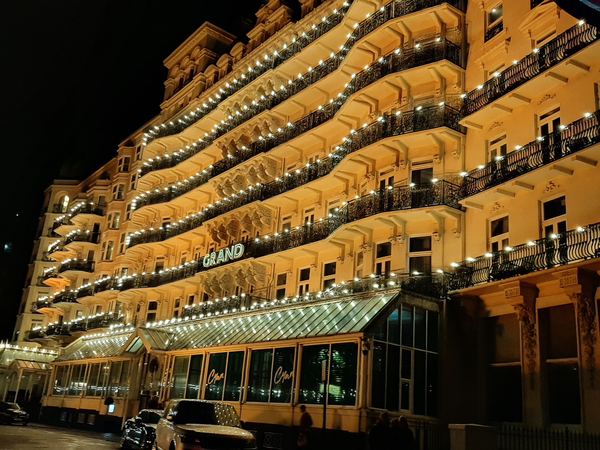 8.6
8.6
The Grand Brighton
Kings Road, central Brighton seafront
from £165/night
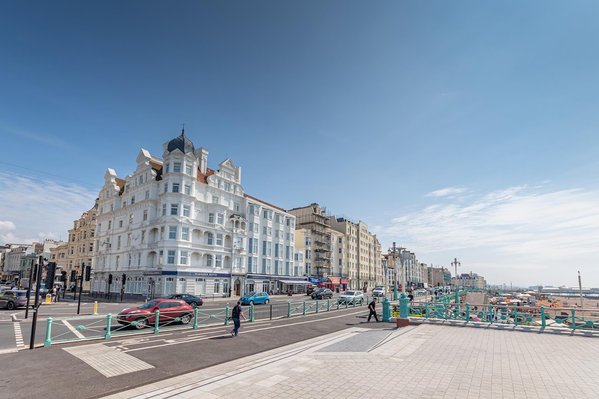 8.5
8.5
Brighton Harbour Hotel & Spa
Kings Road, seafront near the West Pier
from £175/night
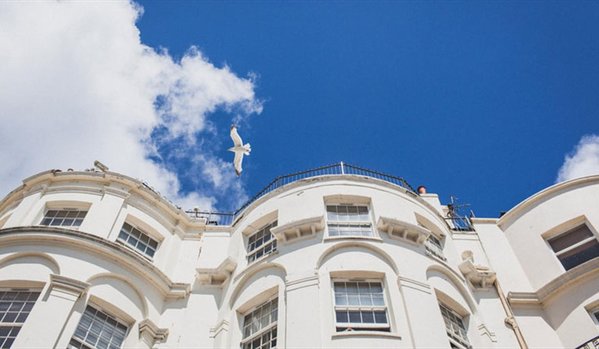 8.9
8.9
Drakes Hotel
Marine Parade, east of the Palace Pier
from £150/night
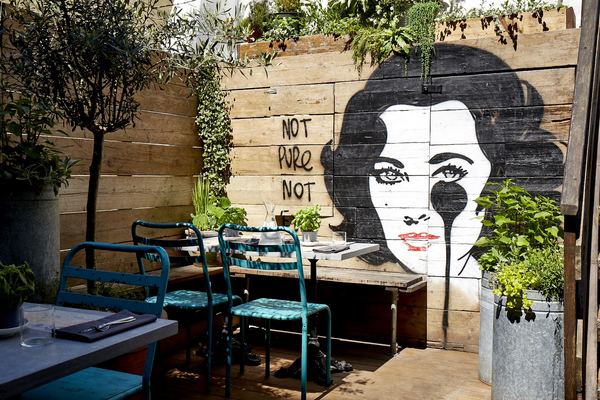 8.8
8.8
Artist Residence Brighton
Regency Square, western seafront
from £145/night
 8.0
8.0
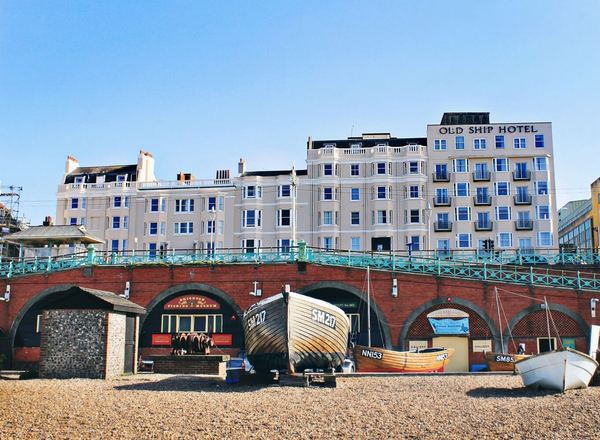
The Old Ship Hotel
Kings Road, beside The Lanes
from £89/night
 8.4
8.4
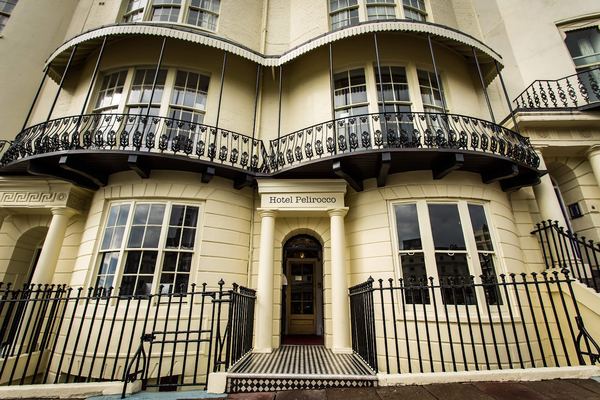
Hotel Pelirocco
Regency Square, central seafront
from £110/night
 9.0
9.0
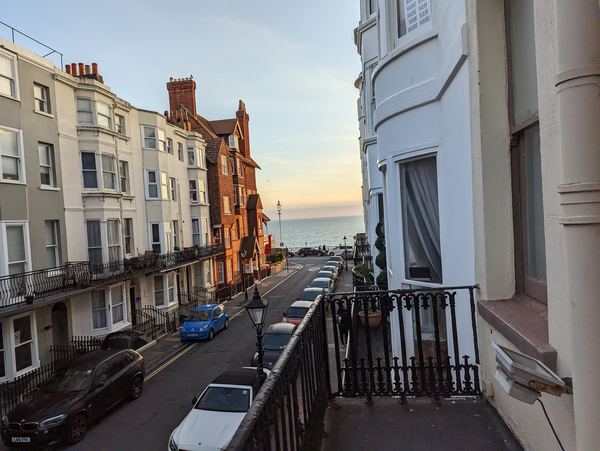
Paskins Town House
Charlotte Street, Kemptown
from £95/night
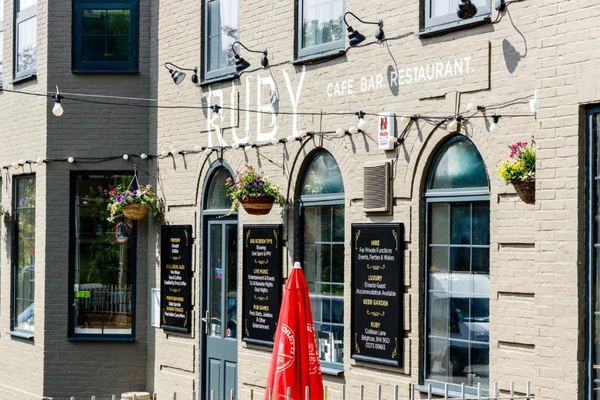
RUBY Pub & Hotel
Coldean Lane, Brighton
Things to Do in Brighton(38)
All attractions in Brighton →Top things to do in Brighton
The classic seaside attractions sit within a few streets of each other, with the Downs and the coast path beyond.
- Royal Pavilion - George IV's seaside palace, remodelled by John Nash between 1815 and 1823 into something Indian on the outside and Chinese within. The domed banqueting room and the music room are the high points, and the kitchens with their cast-iron palm-leaf columns are worth as much time.
- Brighton Palace Pier - opened in 1899 and still working for a living, with amusement arcades, a fairground at the seaward end and doughnuts fried on the deck. Walking to the far end for the view back at the city is free and takes about ten minutes.
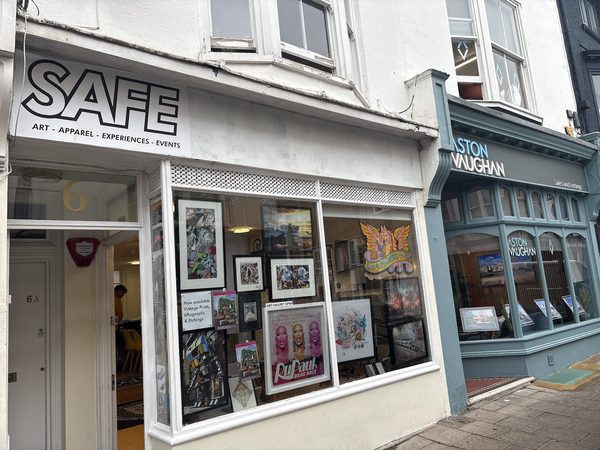
- The Lanes - the surviving street pattern of the old fishing town, now a knot of narrow passages lined with jewellers, antique dealers, small restaurants and pubs. It is easy to get pleasantly lost and impossible to stay lost for long.
- North Laine - the wider grid north of Church Street, with record shops, vintage stalls, cafes and the rambling indoor market of Snoopers Paradise. Saturday mornings are the liveliest time to see it.
- Brighton Museum and Art Gallery - in the former stables of the Pavilion estate, covering fashion, decorative art, world cultures and the social history of the city, including a frank account of its seaside and queer past.
- Volk's Electric Railway - opened in 1883 and the oldest operating electric railway in the world, running along the beach between the Aquarium and Brighton Marina in small open-sided cars.
- SEA LIFE Brighton - housed in a Victorian arcaded hall of 1872 and the oldest aquarium still working anywhere. The architecture of the vaulted main hall is as much of a draw as the tanks.
- Devil's Dyke - a deep dry chalk valley in the Downs about five miles north of the city, owned by the National Trust, with long views across the Weald and a pub at the top. There are buses from the seafront in summer and a stiff walk up from Hove for anyone feeling energetic.

Sleeping Beauty - Brighton Family Panto
⭐ 5.0
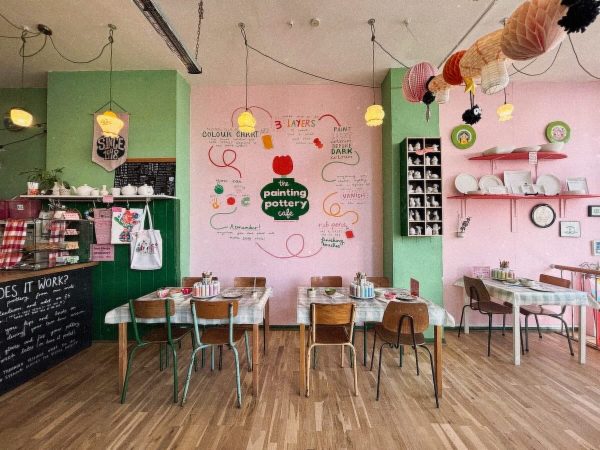
The Painting Pottery Cafe
⭐ 5.0
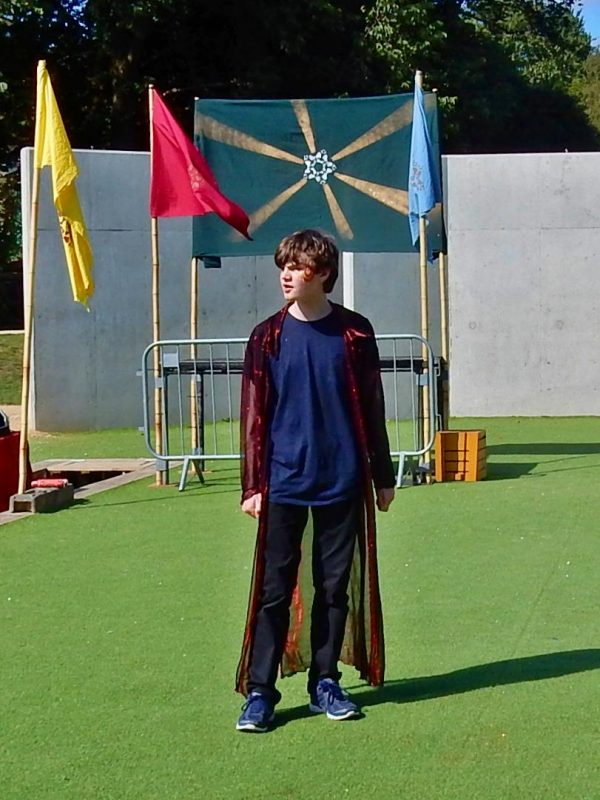
The Young Actors Group
⭐ 5.0

Escape The Vault - Escape Room Brighton
⭐ 4.9
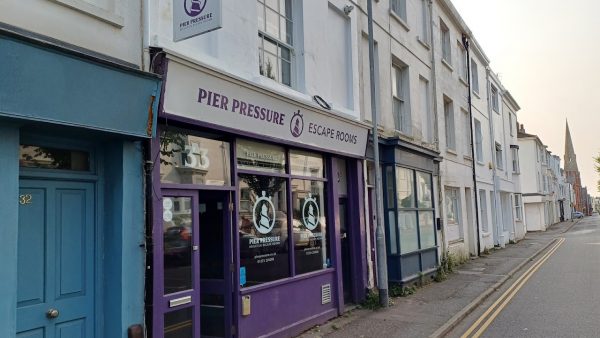
Pier Pressure
⭐ 4.9

Polowood Shooting Ground & Corporate Entertainment Ltd.
⭐ 4.9
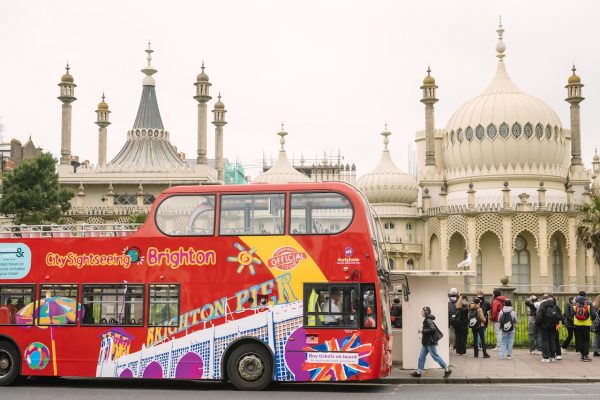
City Sightseeing Brighton Hop on Hop off Tour
⭐ 4.8

ImmotionVR Brighton
⭐ 4.8
Where to Eat in Brighton(644)
All restaurants in Brighton →Food and drink in Brighton
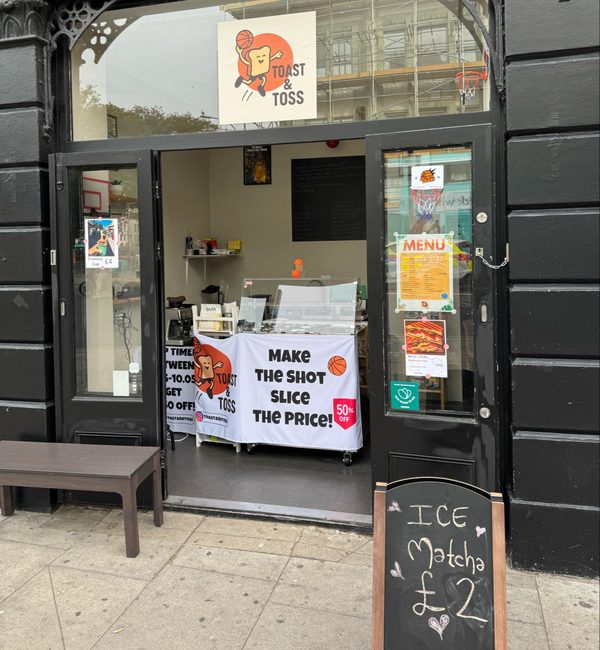
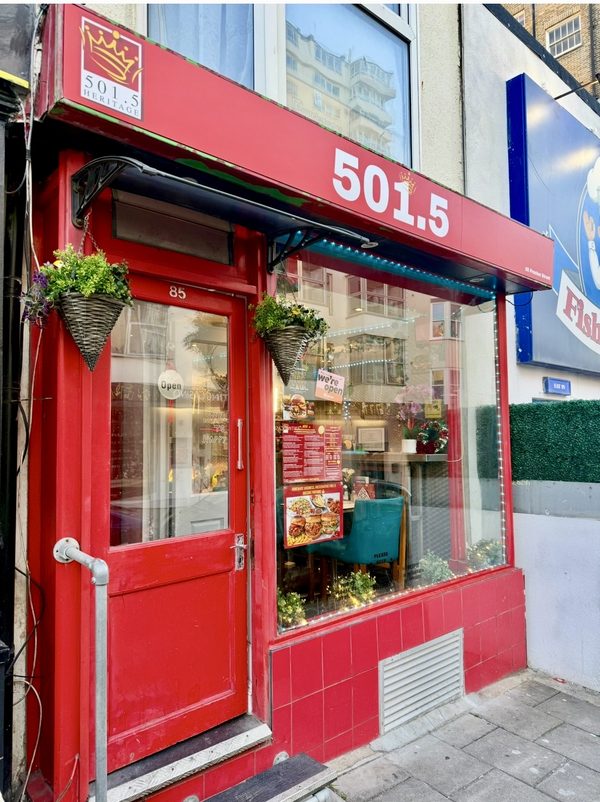
Seafood is the obvious starting point. Sussex day boats land plaice, mackerel, brill, cuttlefish and, in winter, Rye Bay scallops, and much of it appears on menus within a few hundred yards of the beach. English's of Brighton has been selling oysters and fish from the same buildings in The Lanes since 1945 and is the most old-fashioned option; Riddle and Finns runs a marble-topped champagne and oyster bar nearby; and The Salt Room on the seafront grills whole fish over coals. Cheaper and just as good, several of the arches along the fishing quarter sell dressed crab and cockles to eat standing up.
Brighton also has the strongest vegetarian tradition of any English city outside London. Terre a Terre on East Street has been cooking elaborate vegetarian and vegan food for more than thirty years and remains the benchmark; Food for Friends in The Lanes is the long-running everyday alternative. Beyond that, 64 Degrees serves small plates from an open kitchen in the old town, and there is a deep bench of Japanese, Middle Eastern and Italian places aimed at residents rather than day trippers.
For self-caterers and browsers, the Open Market on London Road has produce, fish and cheese stalls under cover, and there are regular farmers' markets across the city. Seaside classics survive intact: fish and chips eaten on the shingle, sugared doughnuts fried on the pier deck, sticks of Brighton rock and a great deal of ice cream.
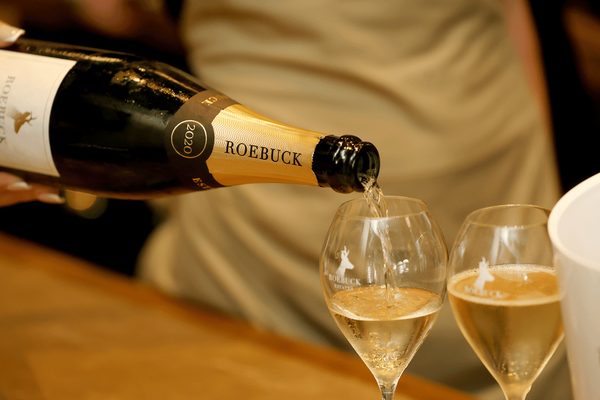
To drink, Sussex is now serious wine country - Ridgeview at Ditchling and Rathfinny near Alfriston both make sparkling wine that appears on local lists - while Harvey's, brewed at Lewes eight miles away, is the standard local bitter. Brighton Bier and Laine Brew Co supply most of the city's craft taps. For pubs, The Basketmakers Arms in North Laine is the one locals send visitors to, and The Cricketers in The Lanes claims to be the oldest in the city.


Attractions Near Brighton
All attractions in Brighton →Worth the trip — within 50 miles of Brighton.
 2 mi
2 mi
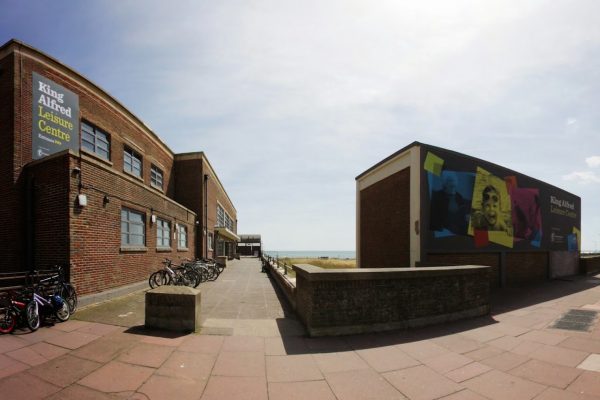
King Alfred Leisure Centre
Hove · ⭐ 3.7
The Outdoors Project
Hove
Hove Park
Hove · ⭐ 4.6
 4 mi
4 mi
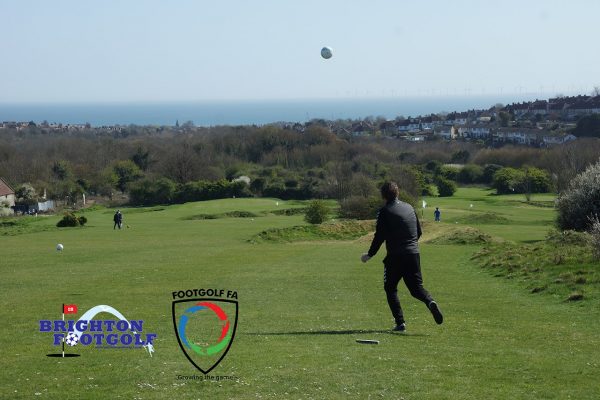
Brighton Footgolf Course
Hove · ⭐ 4.7
 6 mi
6 mi
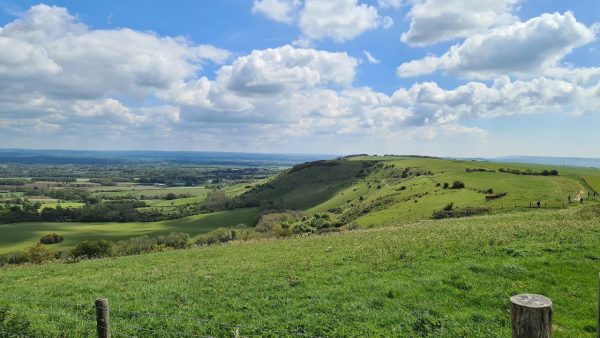
Ditchling Beacon-National Trust
Ditchling · ⭐ 4.7
 7 mi
7 mi
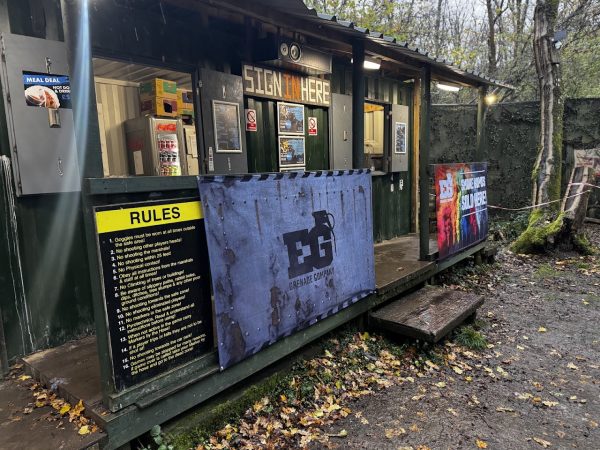
KidsPaintball Brighton
Henfield · ⭐ 4.6
 7 mi
7 mi
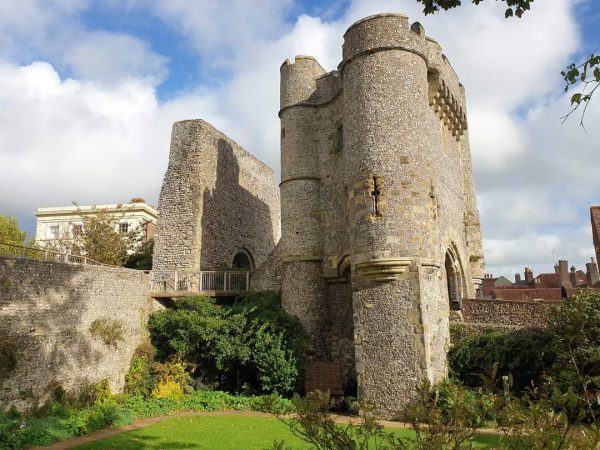
Lewes Castle
Lewes · ⭐ 4.5
 7 mi
7 mi
The Macs Farm
Ditchling · ⭐ 4.9
Camping in Brighton(5)
All campsites in Brighton →About camping in Brighton
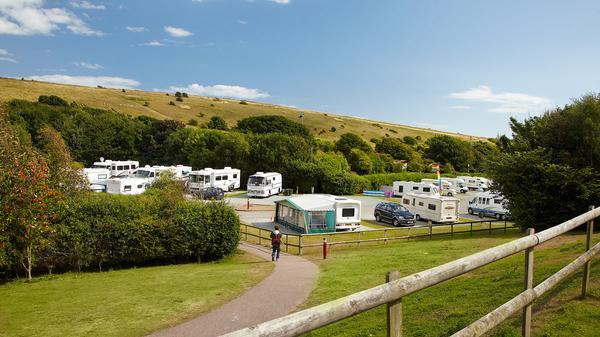
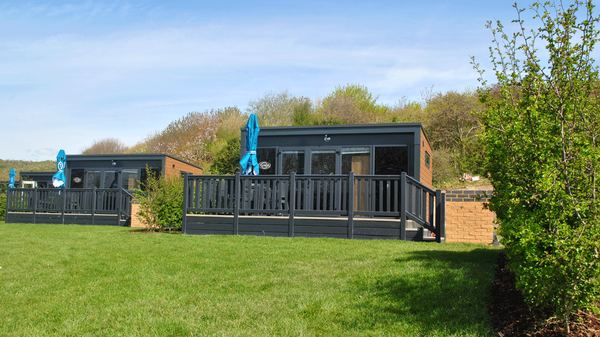
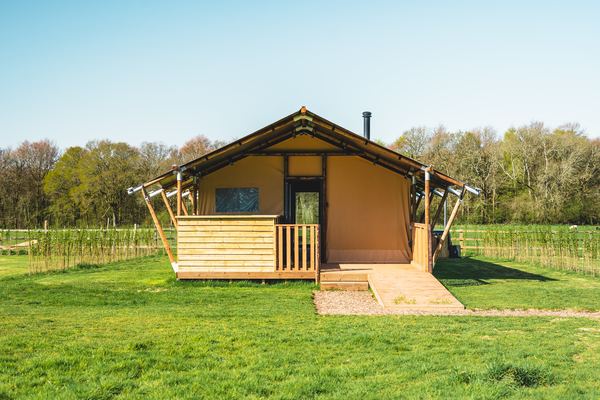
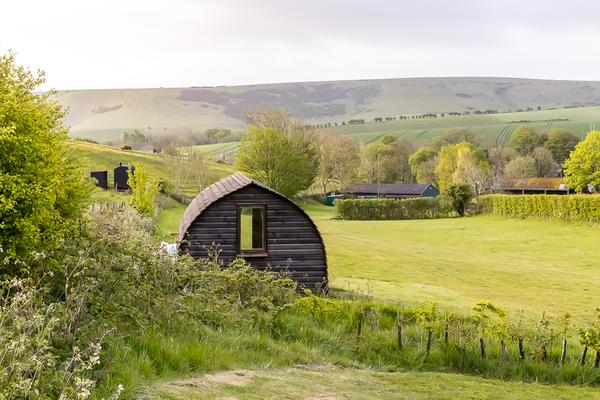
Brighton itself is a dense Victorian and Regency city with almost no undeveloped land inside it, so camping means pitching on the edge of the built-up area or up on the South Downs behind it. That turns out to be no hardship. The National Park boundary runs along the northern edge of the city, and within ten miles there are working farms, chalk downland and pockets of ancient woodland, all with regular buses or a short drive down to the sea.
The terrain is chalk, which matters more than it sounds. Downland drains quickly, so pitches dry out fast after rain and are rarely boggy, but the turf is thin over solid rock and long pegs are often useless - take rock pegs and a mallet. The ridges that give the views also funnel the wind, so guy everything out properly and think twice about a tall family tunnel tent in an unsheltered field. The woodland sites north of Ditchling are far more sheltered, at the cost of the views.
Weather along this coast is among the driest and sunniest in Britain, but the Channel keeps things changeable and evenings cool even in July. May to September is the reliable window, with June and September the best compromise between warm ground, long days and sensible prices. July and August fill up months ahead, and Pride weekend at the start of August books out every site within reach of the city.
Wild camping is not legal in England without the landowner's permission, and that includes all of the South Downs National Park - there is no Scottish-style right to roam here. The Downs are almost entirely farmed or grazed private land crossed by public rights of way, and walkers on the South Downs Way should book pitches in advance at the farms strung along it rather than chance a night out. Campfires are similarly restricted: several sites near Brighton allow them in supplied fire pits, but open fires on the beach or on downland are prohibited.
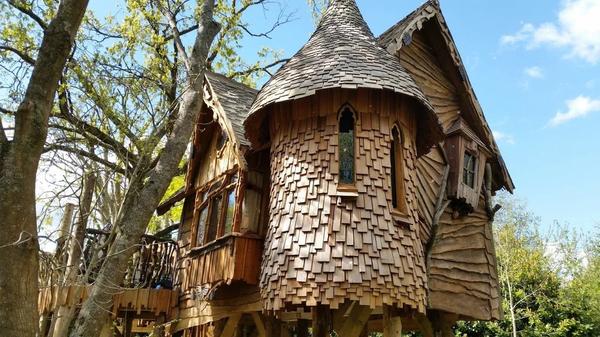
Self-Catering Cottages in Brighton
All cottages in Brighton →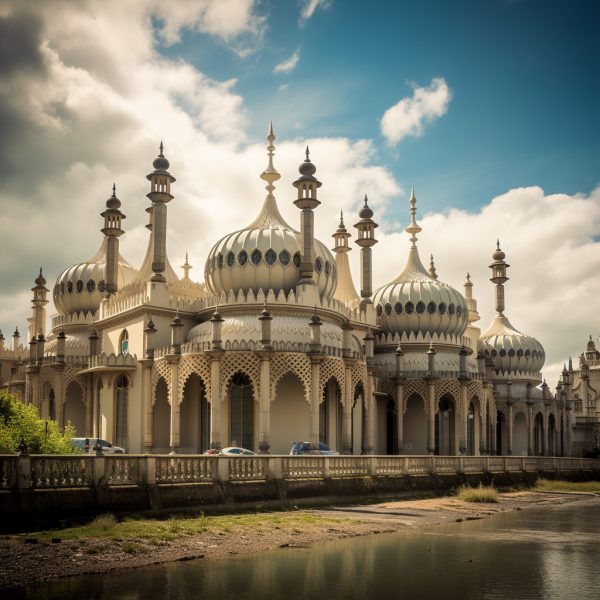
Brighton Pavilion
2 bed · sleeps 4
North Laine Cottage
2 bed · sleeps 4 · from £591
Windsor Court
1 bed · sleeps 3
The Beach Studio
1 bed · sleeps 4 · from £473
Brighton Escape
2 bed · sleeps 4 · from £641
The Little Beach House
2 bed · sleeps 4 · from £661
The Gatehouse Lodge
1 bed · sleeps 2 · from £461
Wren Cottage
1 bed · sleeps 2 · from £461
Common questions about Brighton
How many campsites are there in Brighton?
We list 5 campsites in and around Brighton, of which 5 take tents and 5 offer glamping.
Are there dog-friendly campsites in Brighton?
Yes — 3 of the 5 campsites we list in Brighton accept dogs, including Blackberry Wood and Housedean Farm Campsite.
Which campsites in Brighton have electric hook-up?
3 of the 5 campsites we list in Brighton offer an electric hook-up.
Where can I stay in Brighton?
We list 105 hotels, B&Bs and guest houses in and around Brighton. Prices start from around £89 a night.
What is there to do in Brighton?
We list 38 attractions and things to do in and around Brighton.
Where can I eat in Brighton?
We list 644 restaurants, pubs and cafes in and around Brighton.